
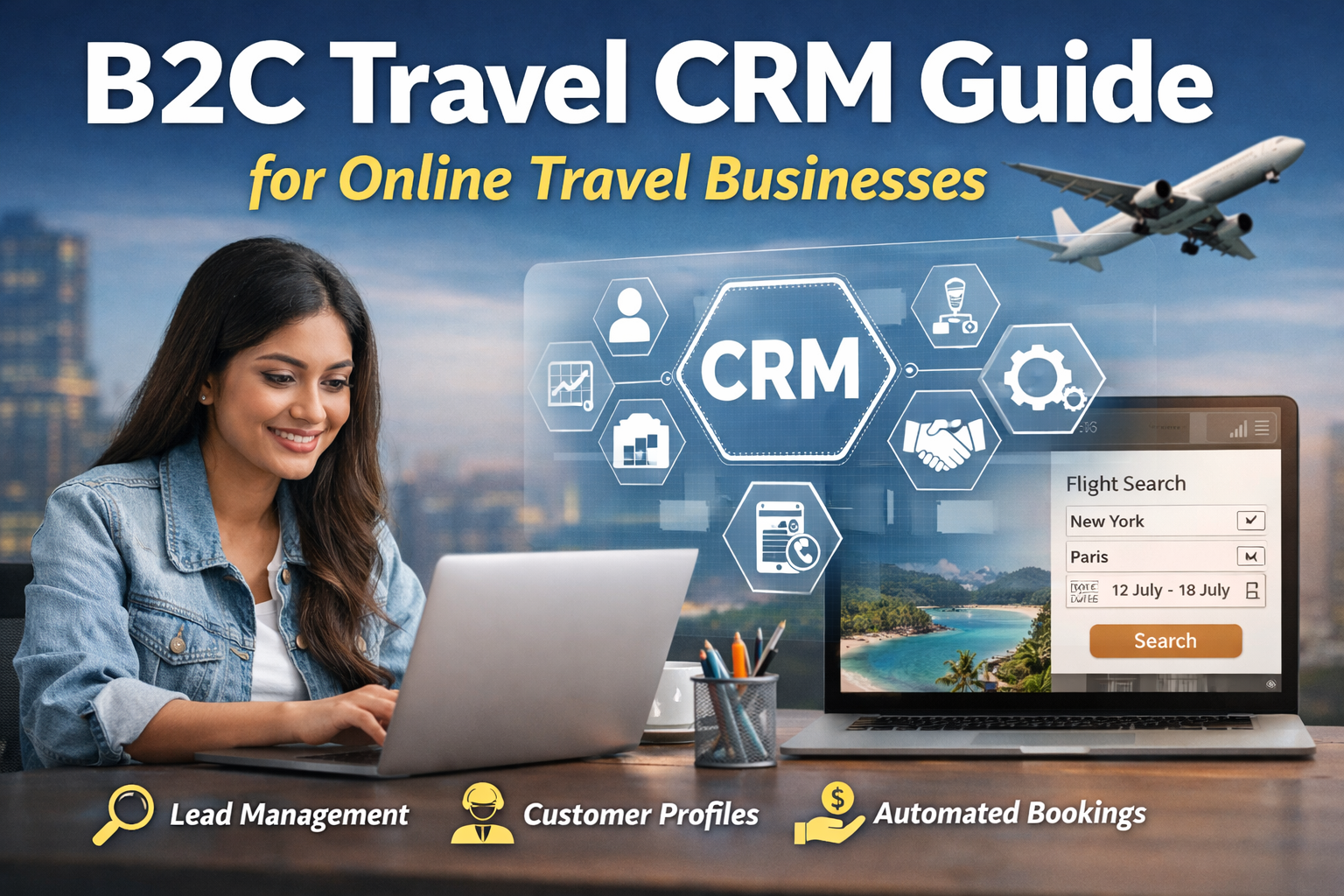
A B2C travel CRM is no longer optional for companies selling directly to customers. As competition increases and customer expectations rise, managing leads, bookings, communication, and post‑sale engagement manually leads to revenue loss.
This guide explains what a B2C travel CRM is, why it matters for modern travel portals, and how it directly supports growth for online travel businesses.
What Is a B2C Travel CRM
A B2C travel CRM is a customer relationship management system designed specifically for travel companies that sell flights, hotels, holiday packages, and activities directly to end users. Unlike generic CRMs, a travel‑focused CRM integrates booking data, customer behavior, and communication workflows into a single platform.
As a result, travel businesses can manage the complete customer lifecycle from first inquiry to repeat booking.
Why B2C Travel Businesses Need a CRM
B2C travel portals handle high inquiry volumes, price‑sensitive customers, and frequent follow‑ups. Therefore, relying on spreadsheets or basic tools creates inefficiencies.
it helps businesses:
- Capture leads from website forms, ads, and chat
- Track customer interactions across channels
- Automate follow‑ups and reminders
- Personalize offers based on travel history
Consequently, conversion rates and customer satisfaction improve.
Key Features of a B2C Travel CRM
Centralized Lead Management
it automatically captures and organizes leads from multiple sources. Moreover, it assigns leads to sales agents and tracks every interaction, ensuring no inquiry is missed.
Booking and Customer Data Integration
Travel CRMs integrate booking information with customer profiles. As a result, agents can view past bookings, preferences, and payment status in one place.
Automated Communication
Email, SMS, and WhatsApp automation allows travel businesses to respond instantly. For example, automated itineraries, payment reminders, and post‑trip follow‑ups reduce manual work and improve response time.
Sales Pipeline and Conversion Tracking
It provides visibility into the sales funnel. Therefore, managers can track lead stages, agent performance, and conversion ratios accurately.
Customer Retention and Repeat Sales
Retention is critical in B2C travel. A CRM enables loyalty campaigns, personalized offers, and re‑marketing based on travel behavior, increasing lifetime value.
How a B2C Travel CRM Supports a Travel Portal
A travel portal becomes more powerful when combined with a CRM. The CRM connects front‑end bookings with back‑office operations.
Benefits include:
- Faster inquiry handling
- Consistent customer communication
- Reduced manual errors
- Scalable operations during peak seasons
This alignment directly impacts revenue growth.
Common Challenges
Without a dedicated CRM, travel businesses often face:
- Lost leads due to delayed responses
- Poor follow‑up management
- Limited visibility into customer behavior
- Difficulty scaling sales operations
Choosing the Right B2C Travel CRM
When selecting a CRM, travel companies should consider:
- Integration with booking engines and travel portals
- Automation capabilities
- Reporting and analytics
- Customization for travel workflows
- Scalability and support
A CRM built specifically for travel delivers better results than a generic solution.
B2C Travel CRM vs Generic CRM
Generic CRMs lack travel‑specific features such as booking data handling, itinerary management, and supplier workflows. In contrast, it is designed to support travel operations end to end.
Therefore, travel businesses benefit from higher efficiency and better customer experiences.
Future of B2C Travel CRM
As travel technology evolves, CRMs are becoming more intelligent. AI‑driven recommendations, predictive analytics, and deeper portal integrations will shape the future of B2C platforms.
Travel businesses adopting these systems early gain a competitive advantage.
Learn More About Travel CRM Technology
For insights into how CRM systems support customer experience in travel and hospitality, refer to Salesforce CRM resources :
Check this : A strong digital growth strategy is essential for sustainable business success.
Final Thoughts
A travel CRM is a foundational tool for any travel business selling directly to customers. By centralizing data, automating communication, and improving customer engagement, it enables sustainable growth.
Travel companies building or scaling a travel portal should align CRM capabilities with their digital platform to maximize efficiency and long‑term success.